
Civil Engineering
About the Course
The Department of Civil Engineering was set up in the year 2008 with an undergrad Engineering program in Civil Engineering. Since its commencement, the Department has ceaselessly developed and taken drives to bestow quality instruction and teach research fitness in Civil Engineering understudies. In the previous six years, the office has seen a great deal of improvement in scholastics to upgrade information, abilities and perspectives in understudies. This was feasible because of persevering educating and non-showing personnel and the help from the liberal administration. Our framework has been cutting edge. The understudies are prepped with multi-dimensional ranges of abilities covering every one of the necessary alumni ascribes. Our attention is on reasonable learning, activities, and exploration. Understudies are given adequate openness to industry and urged to take up projects toward this path.
Vision of Institute
Mission of Institute
- To inculcate professional excellence in students with ethical and moral values.
- To arrange and maintain state of the art infrastructure to excel in studies.
- To nurture academic atmosphere to cater the needs of academic fraternity.
- To enhance industry institute interaction with close relationship with alumnus.
Vision of Civil Engineering.
Our Mission
- To impart high quality professional training at the undergraduate level with an emphasis on basic principles of civil engineering.
- To impart human and ethical values, and interpersonal skills to the students.
- To empower the students with the required skills to solve the complex technological problems of modern society and also provide them with a framework for promoting collaborative and multidisciplinary activities.
Head of Department
Mr Raj Kumar Gupta has completed his M.Tech (Geotechnical Engg.) From K.N.I.T. Sultanpur. He has more than 24 years of experience. He started his career as a structural engineer in the industry. For the last 14 years, he is in the teaching profession. He published more than 10 international research papers as an author and co-author.
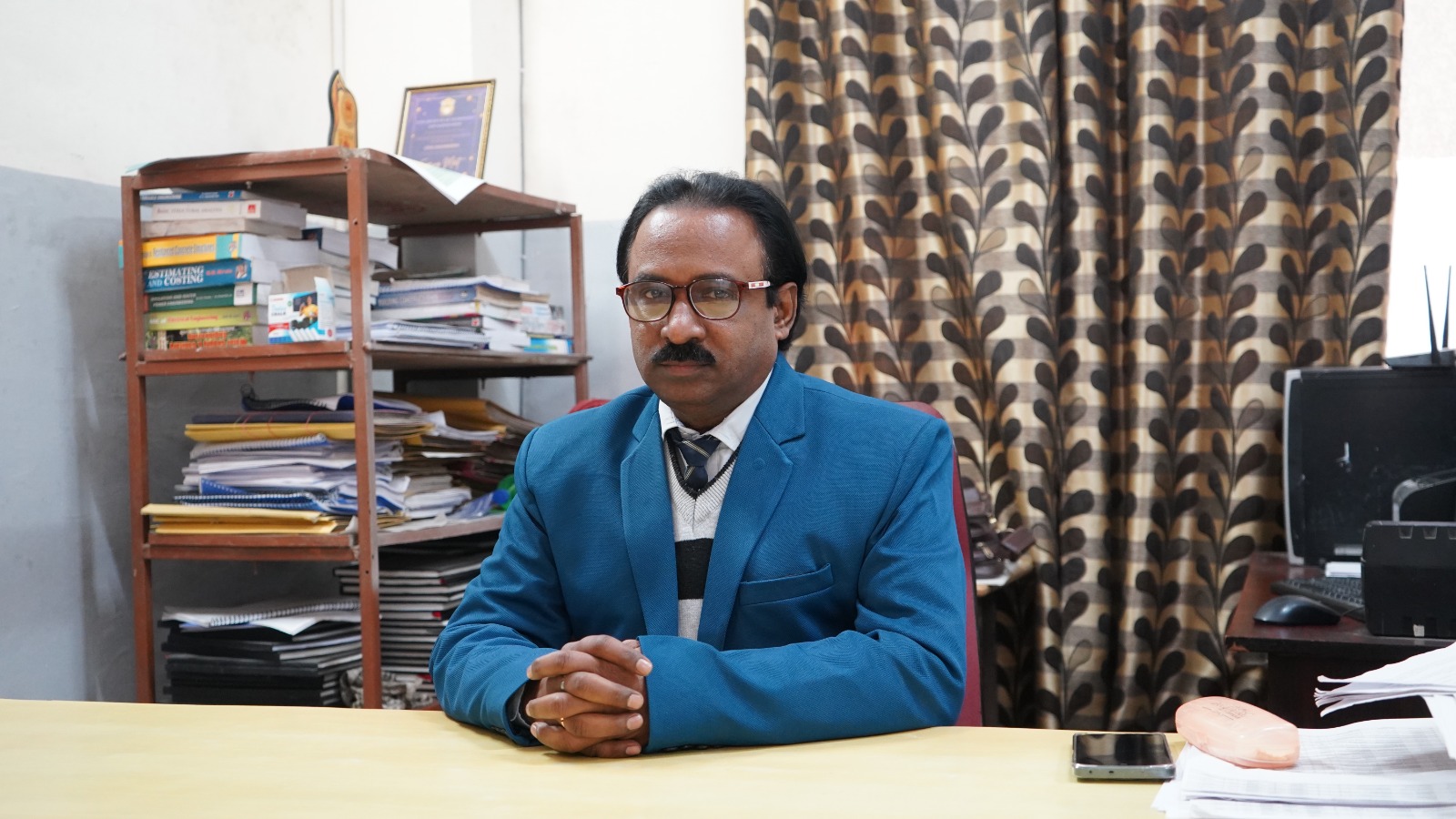
Mr Raj Kumar Gupta
(B. Tech, M. Tech (Geo-Technical Engg.))
HOD Message
Civil engineering is concerned with the environment and with the planning, design, and construction of facilities for meeting the needs of modern society. Our graduates will be leaders and innovators in industry, education and governance for the state, nation and world. The faculty will be recognized for the quality of their research and will influence the national and international agenda.
The department of Civil Engineering offers students a well-rounded understanding of the discipline, combined with the much sought-after design, research and problem-solving skills needed to help create and manage sustainable built and natural environments. The curriculum is balanced between the practical aspects of engineering and a strong theoretical foundation and covers environmental, structural, construction, geotechnical, transportation, and water resources engineering. Students will learn in classes complemented by hands-on projects, time in the lab and field trips.
We, at GGI, create and disseminate knowledge through research and education in the theory and application in civil engineering to serve state and nation in a better way, and to prepare our students to succeed and contribute to society
Civil Engineering in GITM is a legacy that passes on in an environment that strengthens and helps its students build a bright future.
Program Educational Objectives (PEO)
- PEO1. The students will have a sound foundation of mathematics, scientific reasoning and computer engineering fundamentals to formulate, solve and analyze engineering problems.
- PEO2. The students will be able to use modern engineering techniques, skills and tools of computer science and engineering in areas such as design and development of techniques for solving the problem of day to day life using computer systems; and to inculcate the computational and analytical skills among the student as per industry needs.
- PEO3. The students will be able to work in team with excellent communication skills and leadership capabilities along with the practice of ethical and moral values to become professional for community services.
Program Outcomes (PO)
- Engineering knowledge: Apply the knowledge of mathematics, science, engineering fundamentals, and an engineering specialization to the solution of complex engineering problems.
- Problem analysis: Identify, formulate, review research literature, and analyze complex engineering problems reaching substantiated conclusions using first principles of mathematics, natural sciences, and engineering sciences.
- Design/development of solutions: Design solutions for complex engineering problems and design system components or processes that meet the specified needs with appropriate consideration for the public health and safety, and the cultural, societal, and environmental considerations.
- Conduct investigations of complex problems: Use research-based knowledge and research methods including design of experiments, analysis and interpretation of data, and synthesis of the information to provide valid conclusions..
- Modern tool usage: Create, select, and apply appropriate techniques, resources, and modern engineering and IT tools including prediction and modelling to complex engineering activities with an understanding of the limitations.
- The engineer and society: Apply reasoning informed by the contextual knowledge to assess societal, health, safety, legal and cultural issues and the consequent responsibilities relevant to the professional engineering practice.
- Environment and sustainability: Understand the impact of the professional engineering solutions in societal and environmental contexts, and demonstrate the knowledge of, and need for sustainable development.
- Ethics: Apply ethical principles and commit to professional ethics and responsibilities and norms of the engineering practice.
- Individual and team work: Function effectively as an individual, and as a member or leader in diverse teams, and in multidisciplinary settings.
- Communication: Communicate effectively on complex engineering activities with the engineering community and with society at large, such as, being able to comprehend and write effective reports and design documentation, make effective presentations, and give and receive clear instructions.
- Project management and finance: Demonstrate knowledge and understanding of the engineering and management principles and apply these to one’s own work, as a member and leader in a team, to manage projects and in multidisciplinary environments.
- Life-long learning: Recognize the need for, and have the preparation and ability to engage in independent and life-long learning in the broadest context of technological change.
Program Specific Outcomes (PSO)
- PSO1: To provide puissant knowledge of mathematical and algorithmic skills with core subjects of computer science engineering elevated with standard tools and technologies along powered by behavioral attitude in practice to have perfect suitability for industry, academia and research interfaces.
- PSO2: To inculcate the ability of using mathematical abstractions and modeling techniques for formulating real world engineering problems of various domains and design solutions.
- PSO3: To enhance knowledge and skills of understanding, analyzing and developing strategies utilizing the advancement of Civil engineering in upcoming area like Building Information Modeling, Advanced Building Materials, and Smart Cities etc.
Faculty Members
| S.No. | Name | Designation | Qualification |
|---|---|---|---|
| 1 | Mr. Raj Kumar Gupta | Asst Professor & HOD | Master of Technology |
| 2 | Dr. Manish Kumar Agarwal | Professor | Master of Technology |
| 3 | Dr. Deepika Singh | Asst Professor | Ph.D |
| 4 | Mr. OM Prakash Pal | Asst Professor | Ph.D (Pursuing), Master of Technology |
| 5 | Mr. Shubhendu Mishra | Asst Professor | Ph.D (Pursuing), Master of Technology |
| 6 | Mr. Ashish Kumar | Asst Professor | Master of Technology |
| 7 | Ms. Astha Singh | Asst Professor | Master of Technology |
| 8 | Ms. Shikha Singh | Asst Professor | Master of Technology |
| 9 | Ms. Haleema Naaz | Asst Professor | Master of Technology |
| 10 | Mr. Vijendra Kumar Yadav | Asst Professor | Ph.D (Pursuing), Master of Technology |
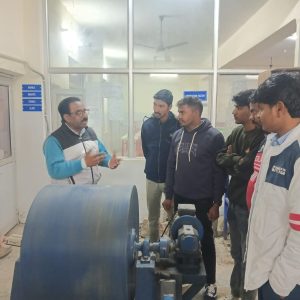
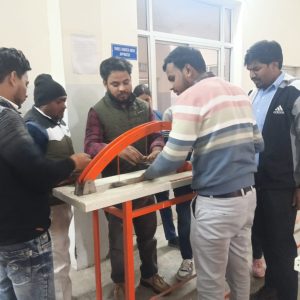
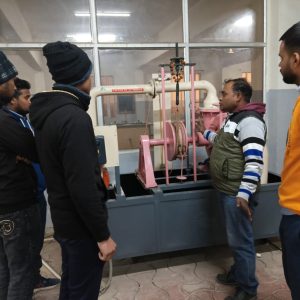
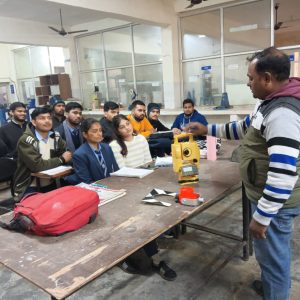
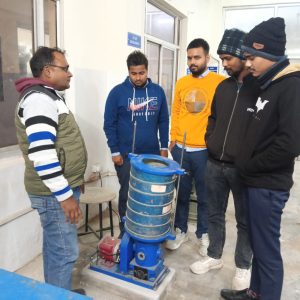
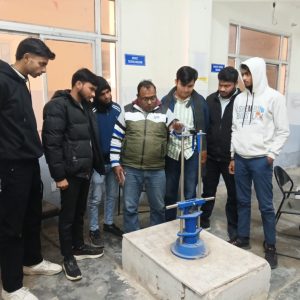
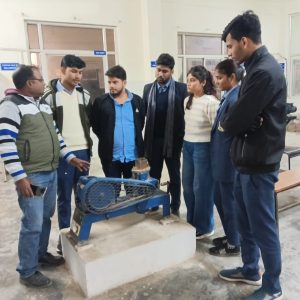
Laboratory
Material Testing Lab
Building planning &
Drawing Lab
CAD Lab
CBNST Lab
Environmental
Engineering Lab
Solid mechanics Lab
Fluid mechanics Lab
Geotechnical
Engineering Lab
Hydraulics & hydraulic machine Lab
Quantity estimation & management Lab
Structural detailing Lab
Surveying &
geometrics Lab
Transportation Engineering Lab
Non-destructive Lab
Achievements of civil Engineering Department
1. Introduction
During the semester, the Department of Computer Science &Engineering organized various academic, technical, and co-curricular events to enhance students’ knowledge, skills, research orientation, and professional development. These activities included seminars, workshops, guest lectures, competitions, training programs, and innovation-oriented activities
KUMKUM VERMA AKTU GOLD MEDALIST 2023-24
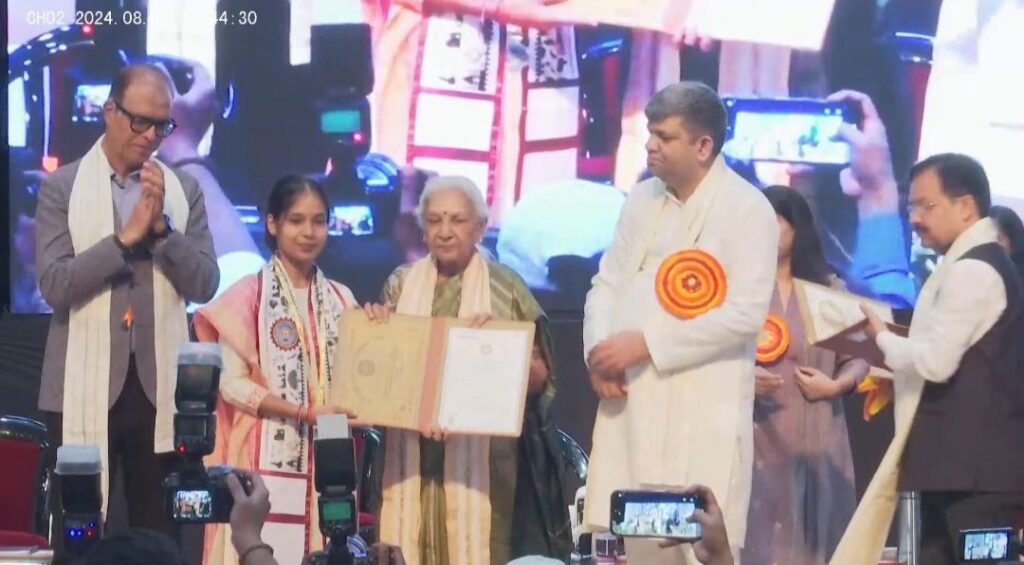
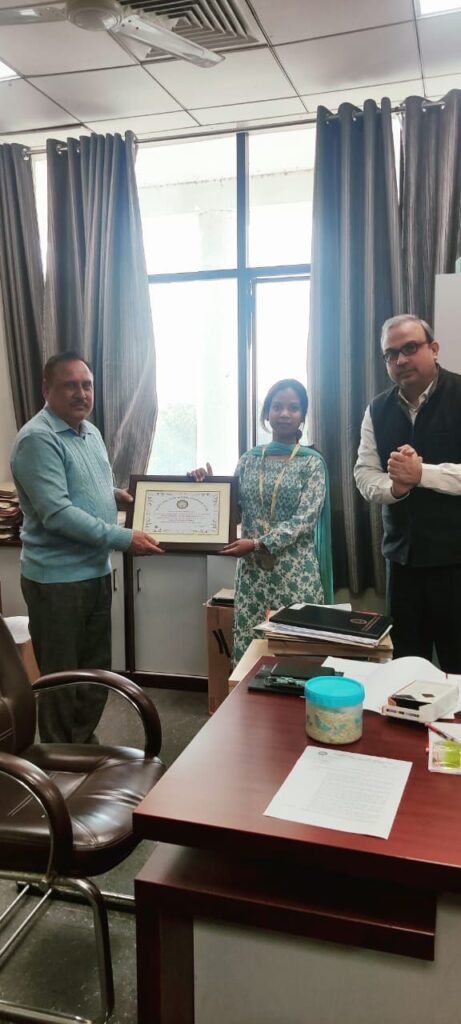
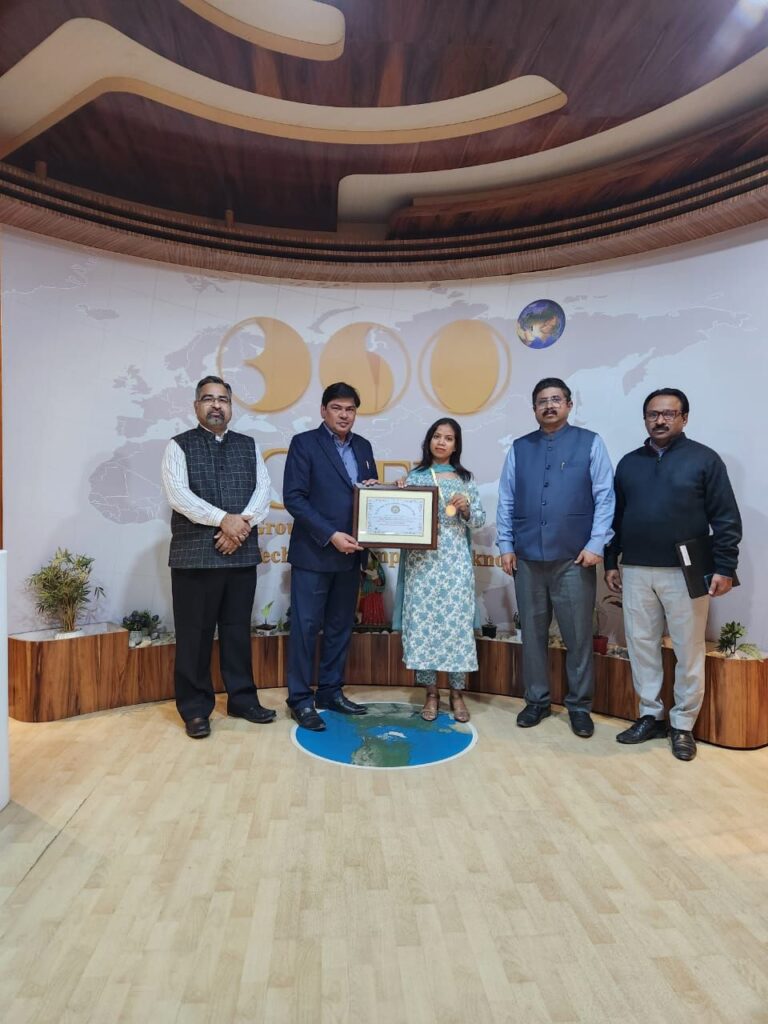
KAMLA RANI AWARD PRIYA BHARTI 2022-23
BRONZE MEDAL SACHIN KUMAR 2024-25
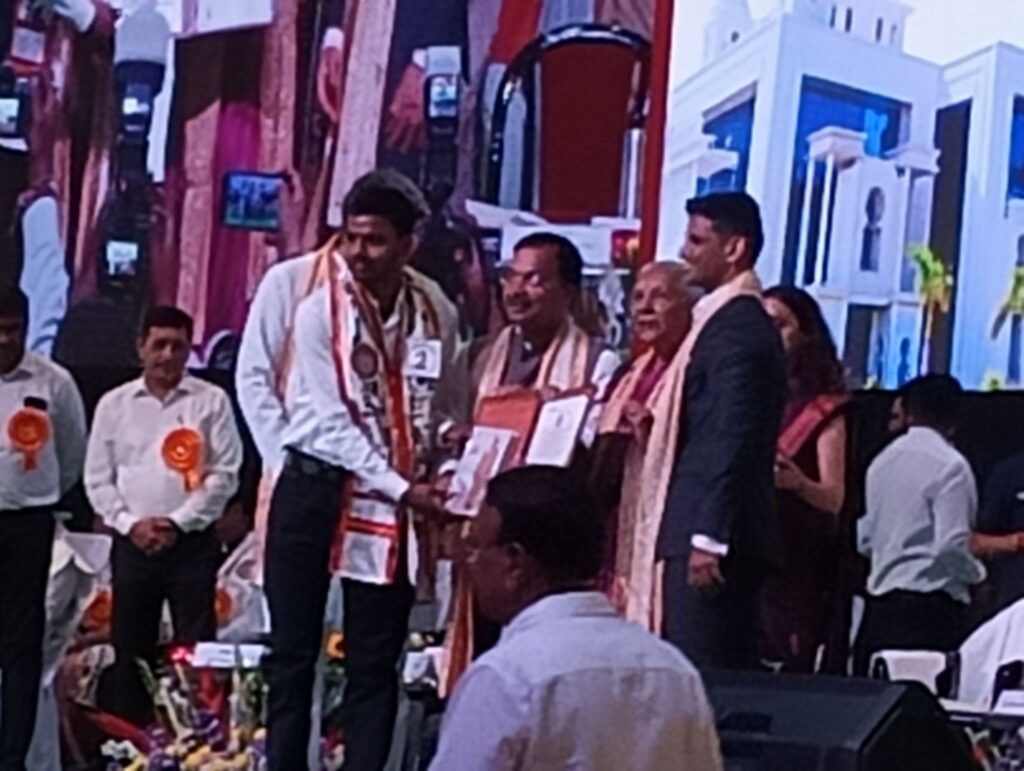
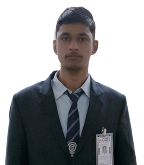
AKTU 7TH POSITION VIVEK TIWARI 2024-25
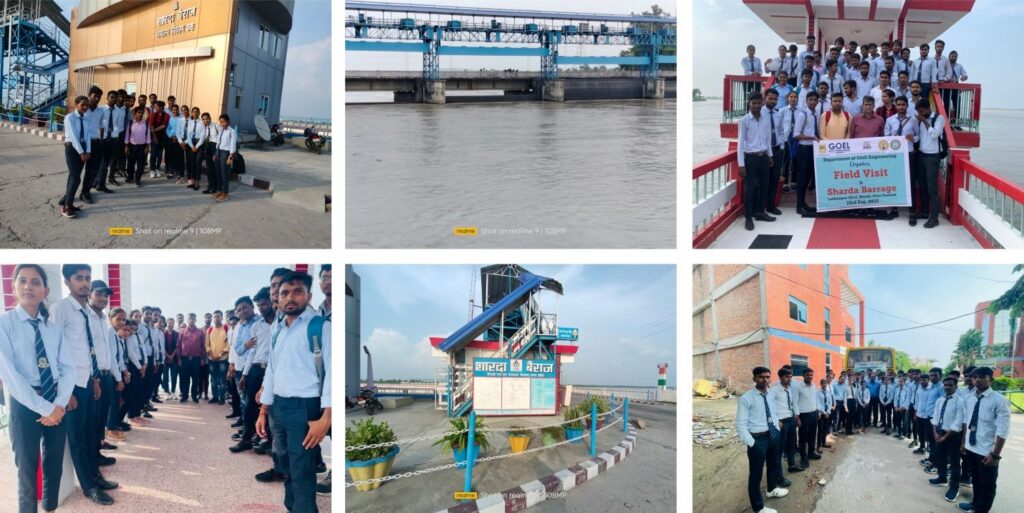
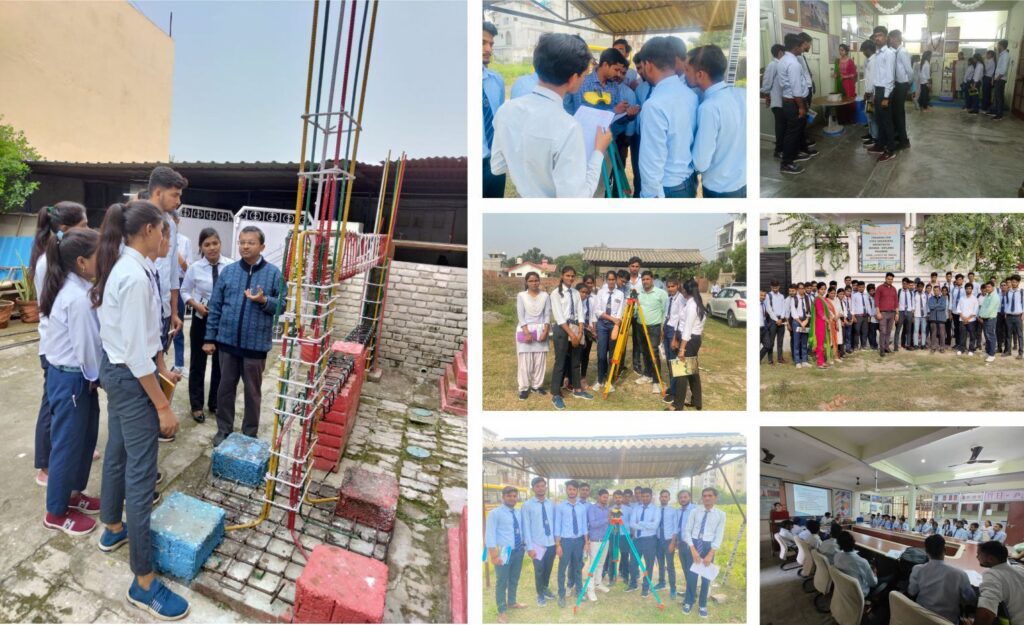
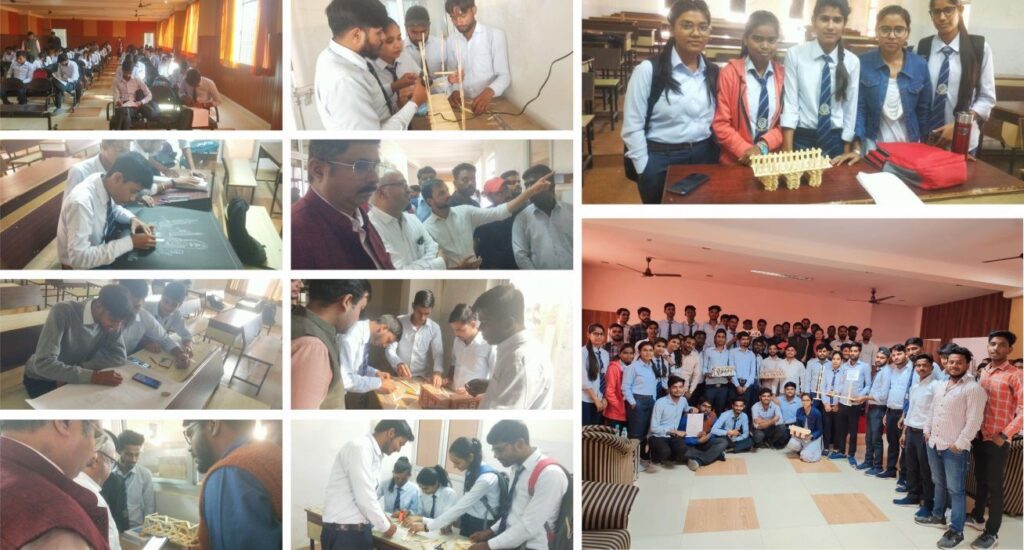
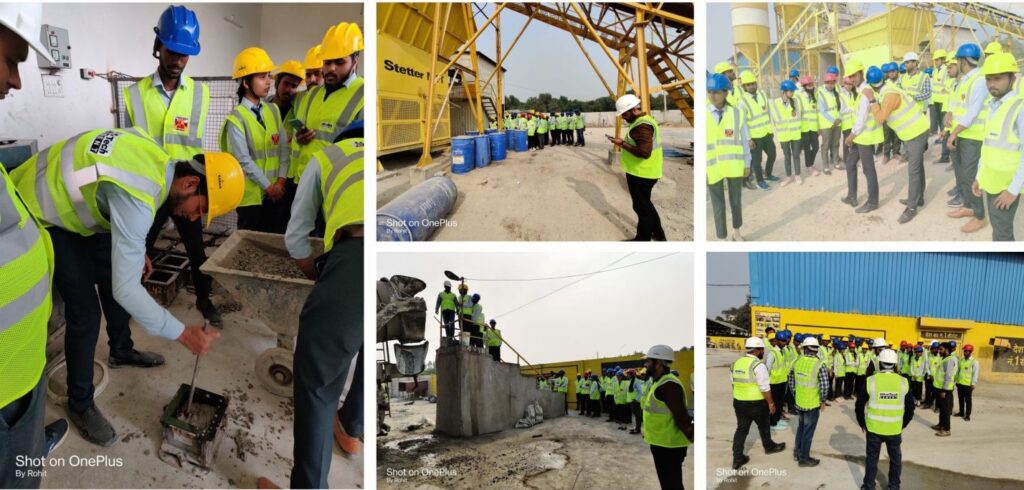
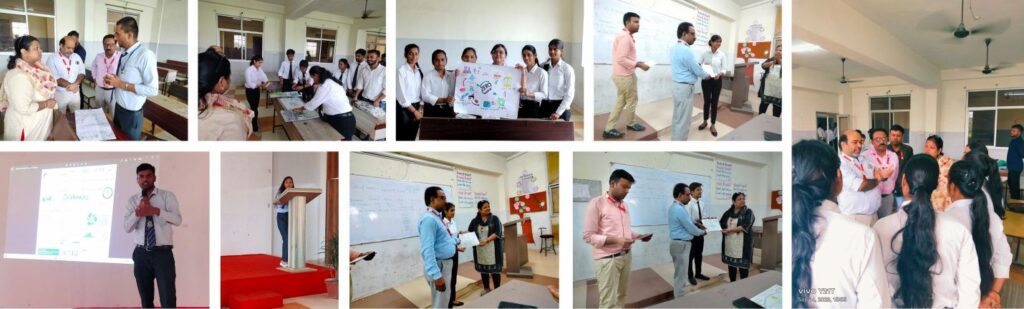
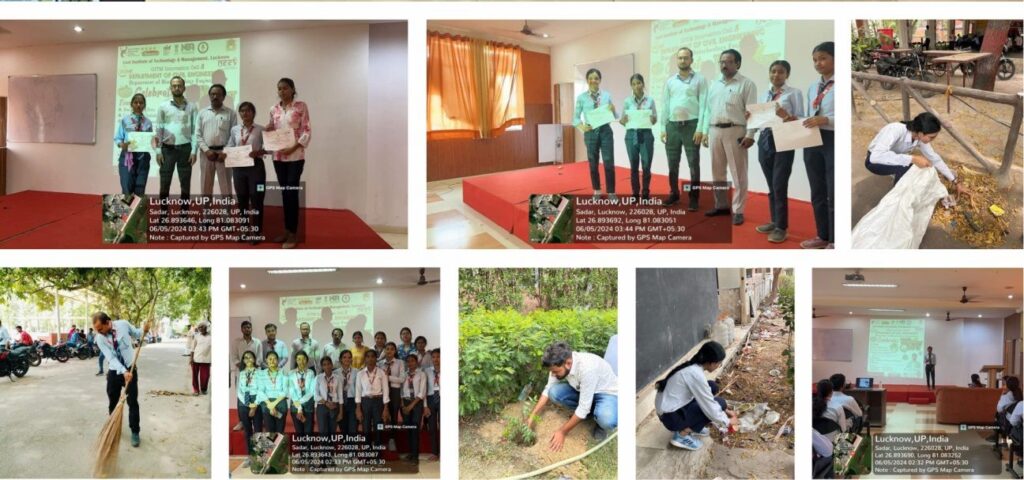
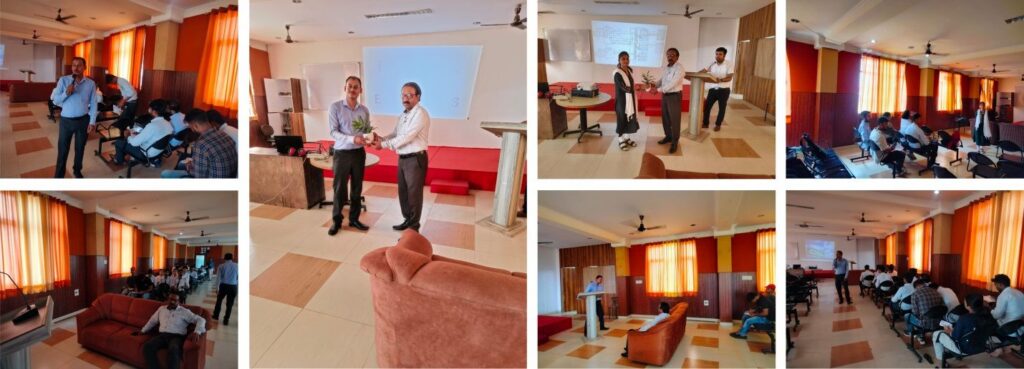
Departmental Events of Civil Engineering
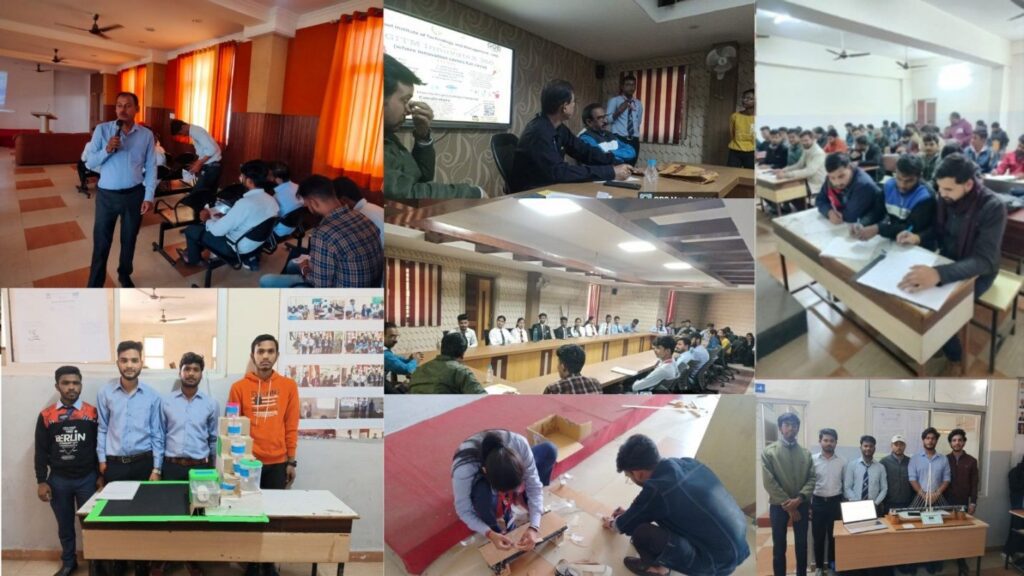
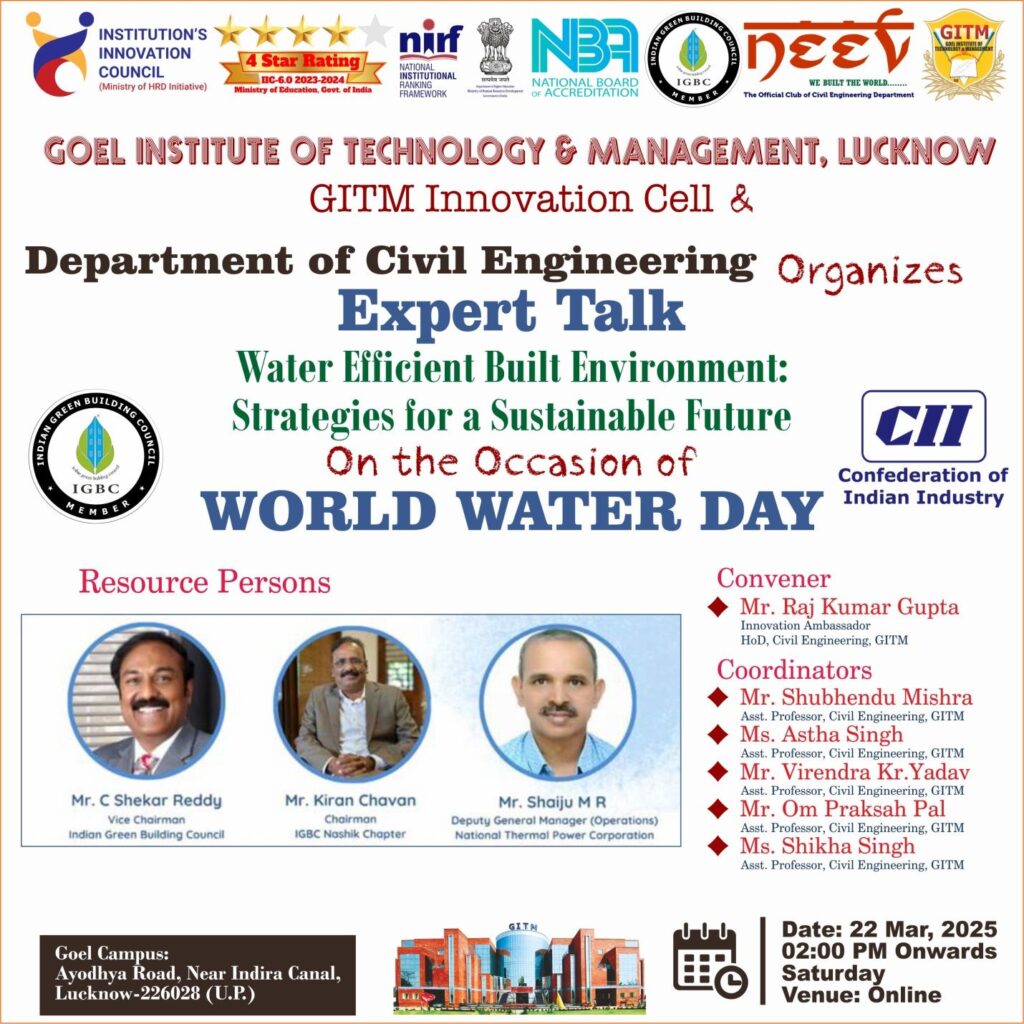
About the Department
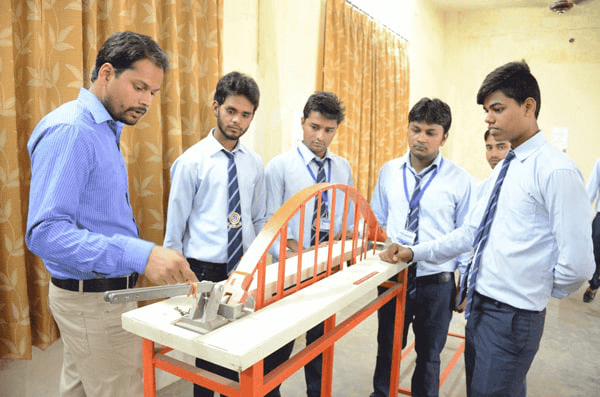
The Department of Civil Engineering was set up in the year 2008 with an undergrad Engineering program in Civil Engineering. Since its commencement, the Department has ceaselessly developed and taken drives to bestow quality instruction and teach research fitness in Civil Engineering understudies. In the previous six years, the office has seen a great deal of improvement in scholastics to upgrade information, abilities and perspectives in understudies. This was feasible because of persevering educating and non-showing personnel and the help from the liberal administration. Our framework has been cutting edge. The understudies are prepped with multi-dimensional ranges of abilities covering every one of the necessary alumni ascribes. Our attention is on reasonable learning, activities, and exploration. Understudies are given adequate openness to industry and urged to take up projects toward this path.
Other Courses
Head of Department
Mr Raj Kumar Gupta has completed his M.Tech (Geotechnical Engg.) From K.N.I.T. Sultanpur. He has more than 24 years of experience. He started his career as a structural engineer in the industry. For the last 14 years, he is in the teaching profession. He published more than 10 international research papers as an author and co-author.
Mr Raj Kumar Gupta
(B. Tech, M. Tech (Geo-Technical Engg.))
HOD Message
Civil engineering is concerned with the environment and with the planning, design, and construction of facilities for meeting the needs of modern society. Our graduates will be leaders and innovators in industry, education and governance for the state, nation and world. The faculty will be recognized for the quality of their research and will influence the national and international agenda.
The department of Civil Engineering offers students a well-rounded understanding of the discipline, combined with the much sought-after design, research and problem-solving skills needed to help create and manage sustainable built and natural environments. The curriculum is balanced between the practical aspects of engineering and a strong theoretical foundation and covers environmental, structural, construction, geotechnical, transportation, and water resources engineering. Students will learn in classes complemented by hands-on projects, time in the lab and field trips.
We, at GGI, create and disseminate knowledge through research and education in the theory and application in civil engineering to serve state and nation in a better way, and to prepare our students to succeed and contribute to society
Civil Engineering in GITM is a legacy that passes on in an environment that strengthens and helps its students build a bright future.
Silent feature of Department
- League of well qualified and experienced faculties from reputed colleges and various publications in reputed journals.
- An in-house “Centre of excellence” is established in collaboration with Royal Enfield for Mechanical Engineering Students.
Key thrust areas: Civil Engineering
–> Concrete Durability
–> Experimental Soil Mechanics
–> Wastewater Treatment
- Several Meritorious students including Gold medalist in AKTU University Examination.
- Students selected in various all India examinations like UPSC, GATE, IES etc.
- Various interactions with industry and academia personnel to enrich young minds through
- Industrial Visits
- Seminar
- Guest Lectures
- Workshops
- Promoting and Participation of Students in National and State level competition and various University level Events.
- Strong links with an organization like ASME, SME, ACM, Tata Steel, UltraTech Cement for Training and Research.
Civil Engineering Laboratory
- Material Testing Lab
- Building planning & drawing Lab
- CAD Lab
- CBNST Lab
- Environmental Engineering Lab
- Solid mechanics Lab
- Fluid mechanics Lab
- Geotechnical engineering Lab
Hydraulics & hydraulic machine Lab - Quantity estimation & management Lab
Structural detailing Lab - Surveying & geometrics Lab
- Transportation Engineering Lab
- Non-destructive Lab
Program Educational Objectives (PEO)
- Practice the profession of civil engineering, make progress toward certification as licensed Professional Engineers and/or pursue graduate studies
- Graduates shall attain the state of the art knowledge in various field of civil engineering and will take every opportunity coming their way to augment already existing knowledge
- Contribute new ideas and innovations that empower advancements in the civil engineering profession
Program Outcomes (PO)
- Engineering knowledge: Apply the knowledge of mathematics, science, engineering fundamentals, and an engineering specialization to the solution of complex engineering problems.
- Problem analysis: Identify, formulate, review research literature, and analyze complex engineering problems reaching substantiated conclusions using first principles of mathematics, natural sciences, and engineering sciences.
- Design/development of solutions: Design solutions for complex engineering problems and design system components or processes that meet the specified needs with appropriate consideration for the public health and safety, and the cultural, societal, and environmental considerations.
- Conduct investigations of complex problems: Use research-based knowledge and research methods including design of experiments, analysis and interpretation of data, and synthesis of the information to provide valid conclusions..
- Modern tool usage: Create, select, and apply appropriate techniques, resources, and modern engineering and IT tools including prediction and modelling to complex engineering activities with an understanding of the limitations.
- The engineer and society: Apply reasoning informed by the contextual knowledge to assess societal, health, safety, legal and cultural issues and the consequent responsibilities relevant to the professional engineering practice.
- Environment and sustainability: Understand the impact of the professional engineering solutions in societal and environmental contexts, and demonstrate the knowledge of, and need for sustainable development.
- Ethics: Apply ethical principles and commit to professional ethics and responsibilities and norms of the engineering practice.
- Individual and team work: Function effectively as an individual, and as a member or leader in diverse teams, and in multidisciplinary settings.
- Communication: Communicate effectively on complex engineering activities with the engineering community and with society at large, such as, being able to comprehend and write effective reports and design documentation, make effective presentations, and give and receive clear instructions.
- Project management and finance: Demonstrate knowledge and understanding of the engineering and management principles and apply these to one’s own work, as a member and leader in a team, to manage projects and in multidisciplinary environments.
- Life-long learning: Recognize the need for, and have the preparation and ability to engage in independent and life-long learning in the broadest context of technological change.
Program Specific Outcomes (PSO)
- Graduates shall have the ability to apply fundamental knowledge of biological and engineering principles and use of scientific methods to apply quantitative, qualitative and computational skills to solve the problems in biotechnology industry and research organizations.
- Graduates shall have the research-based knowledge viz., experimental design, analysis and interpretation of various biological data related to genetics and molecular biology, genetic engineering, and bioinformatics for fruitful developments in biotechnology.
- Graduates shall have the ability to work in groups or individually with strong moral values to promote the importance of entrepreneurship, communication and management skills for the next generation biotechnologists.
Faculty Members
| S.No. | Name | Designation | Qualification |
|---|---|---|---|
| 1 | Mr. Raj Kumar Gupta | Asst Professor & HOD | Master of Technology |
| 2 | Dr. Manish Kumar Agarwal | Professor | Master of Technology |
| 3 | Dr. Deepika Singh | Asst Professor | Ph.D |
| 4 | Mr. OM Prakash Pal | Asst Professor | Master of Technology, Ph.D (Pursuing) |
| 5 | Mr. Shubhendu Mishra | Asst Professor | Master of Technology, Ph.D (Pursuing) |
| 6 | Mr. Ashish Kumar | Asst Professor | Master of Technology |
| 7 | Ms. Astha Singh | Asst Professor | Master of Technology |
| 8 | Miss Shikha Singh | Asst Professor | Master of Technology |
| 9 | Ms. Haleema Naaz | Asst Professor | Master of Technology |
| 10 | Mr. Sachin Gupta | Asst Professor | Master of Technology |