
MBA
About the Course
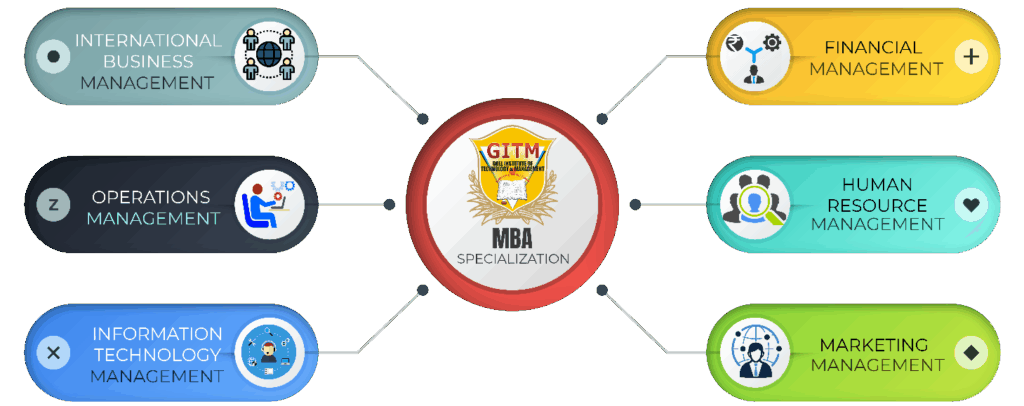
The Department of Management was set up in the year 2008 with the goal of delivering Young Management Executives with worldwide norms. The MBA program is a 2-year (4 semesters) full-time Master Degree program in Business Administration. While the primary year is given to the fundamental course, the subsequent year would empower the understudies to acquire a profundity of information in various zones and spend significant time in elective fields like Marketing Management, Human Resource Management, Finance Management, International Business Management, Information Technology and Operations Management.
The office keeps up elevated expectations in leading talks by academicians, Industrial visits, Personality improvement programs, Case studies and Guest speakers from Industry. A scholarly group of employees forms the excited understudies into complex experts. As correspondence assumes a significant part in the current situation, the office with the help of the English Faculty leads the Communication Skills Workshops to the understudies. Aside from this, the Department conducts different intuitive preparing programs for the understudies.
The branch of Management is resolved to grant Technical and Research-based quality training and to foster inventive abilities among the understudies and to advance the scholastic exercises through constant improvement in the instructing and learning measures. The office additionally centres around imbuing trust in the personalities of understudies and fostering them as business visionaries. It creates the ability for consultative exercises by giving freedoms to industry–establishment collaboration. It is additionally continually updating the specialized mastery for delivering equipped experts to oblige the requirements of society and to address the worldwide difficulties. Much consideration is taken to include the person in the advancement of expert abilities and to take a functioning interest in guiding the understudies.
Our Vision
To create skilled biotechnology professionals who can innovate, invent, and disseminate knowledge for the betterment of society and the protection of the environment.
Our Mission
- To nurture competent biotechnologists for the bio-industry who contribute to national growth through research and development.
- To inculcate principles of bioethics, safety regulations, and strong moral and ethical values among students.
- To equip students with industry-relevant skills and expose them to the
HoD Department
In the present globally acquired business environment, dynamic Managers having vision, resourcefulness and proficiency to face the problems and challenges are in demand. Keeping this in view, the Department of Management Studies, GITM trains the students with the quality education and skillsets required in the business world. The pedagogy followed is in coherence with the current requirements in order to bring out the best in the students to be successful Managers. The Institution has highly competent, committed and proficient Faculties who have associated their personal aims and growth with that of the Institution. We concentrate on providing soft skills with special emphasis on Spoken English, Role Plays, Case Discussions, Mock Interviews and Group Discussions etc. The students of the Department have been actively participating in the Consultancy Development Cell as well as Entrepreneurship Development Centre in the Institution. This practical approach helps students to face the highly competitive environment and unleash their full potential.
With Best Wishes
Course Offered : Master of Business Administration
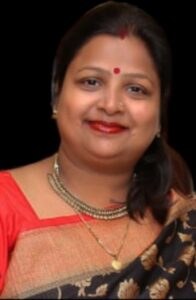
Dr. Jyoti Agarwal
HOD-MBA
Program Educational Objectives (PEO)
- To impart knowledge of the fundamentals of Management theory and its application in problem solving and apply appropriate tools for decision making required for solving complex managerial problems.
- To develop sound knowledge of the entrepreneurial process and inculcate creativity and innovation among students
- To produce industry ready graduates having highest regard for Personal & Institutional Integrity, Social Responsibility, Teamwork and Continuous Learning
Program Outcomes (PO)
The MBA program is a student-centric program with the objective of developing a career in diverse sectors of the industry domestically and globally. The MBA program not only facilitates learning in theory and practice of different functional areas of management but also equips the students with an integrated approach to various functions of management. The curriculum is designed in a way that Institutes, Faculty and Students will shift their focus from a traditional methodology that excessively focuses on industry towards broad-based learning, encompassing the end to end processes involved in developing entrepreneurial skills looking at needs and demands of broader sections of the society.
1. To assimilate the understudies with the imperative space information, abilities and right mentality important to give the successful initiative in a worldwide climate.
2. To foster able administration experts with solid moral qualities, fit for expecting a significant job in different areas of the Indian Economy & Society.
3. To teach proactive intuition to guarantee powerful execution in the dynamic financial and business environment.
4. To bridle innovative methodology and ranges of abilities lined up with the public needs.
Program Specific Outcomes (PSO)
- To work successfully as a Management Graduate with the requisite skill set for marketing, finance and human resource domain as acquired from the respective specialized domain. To impart knowledge gained from the compulsory Summer Internship Project (eight weeks) in the industry as per the requirement of the concerned organization.
- To educate students with proficiency in the specific area of specialization in Master of Business Administration and help them to show their competency in the understanding of marketing, finance and how to make workforce in the industry with the requisite skills of HRM.
- Periodic workshops, industrial visit and seminars are being arranged for students consistently throughout the course for a better understanding of the subject knowledge and also to equip them with requisite skills of the industry.
Faculty Members
| S.No. | Name | Designation | Qualification |
|---|---|---|---|
| 1 | Dr. Jyoti Agarwal | Professor(HOD) | Ph.D |
| 2 | Dr. Surendra Kumar | Associate Professor | Ph.D |
| 3 | Mr. Prashant Srivastava | Asst Professor | Masters in Business Administration |
| 4 | Mr. Shadab Siddiqui | Asst Professor | Masters in Business Administration |
| 5 | Mr. Shubham Agarwal | Asst Professor | Masters in Business Administration |
| 6 | Mr. Indrajeet Singh | Asst Professor | Masters in Business Administration |
| 7 | Ms. Pratigya Srivastava | Asst Professor | Masters in Business Administration |
| 8 | Mrs. Priyanka Mishra | Asst Professor | Masters in Business Administration |
| 9 | Mr. Vinay Kumar | Asst Professor | Masters in Business Administration |
| 10 | Mr. Amit Anand Agrawal | Asst Professor | Masters in Business Administration |
| 11 | Mr. Sandeep Srivastava | Asst Professor | Masters in Business Administration |
| 12 | Mr. Sharad Chandra | Asst Professor | Masters in Business Administration |
| 13 | Dr. Vidushi Srivastava | Asst Professor | Ph.D |
| 14 | Ms. Niharika Shukla | Asst Professor | Masters in Business Administration |
| 15 | Ms. Khan Fatima Bano Sartaj | Asst Professor | Masters in Business Administration |
| 16 | Ms. Ruby Mishra | Asst Professor | Masters in Business Administration, Ph.D (Pursuing) | 17 | Mr. Abhinav Mani Tripathi | Asst Professor | Masters in Business Administration, Ph.D (Pursuing) | 18 | Ms. Sadaf Sajid | Asst Professor | Masters in Business Administration | 19 | Ms.Ayushi Srivastava | Asst Professor | Masters in Business Administration |
Laboratory
Applied Physics Laboratory
Applied Chemistry Laboratory
English Language Lab
Laboratory
- Applied Physics Laboratory
- Applied Chemistry Laboratory
- English Language Lab
Program Outcomes (PO)
- Engineering knowledge: Apply the knowledge of mathematics, science, engineering fundamentals, and an engineering specialization to the solution of complex engineering problems.
- Problem analysis: Identity, formulate, review research literature, and analyze complex engineering problems reaching substantiated conclusions using first principles of mathematics, natural sciences, and engineering sciences.
- Design/development of solutions: Design solutions for complex engineering problems and design system components or processes that meet the specified needs with appropriate consideration for public health and safety, and the cultural, societal, and environmental considerations.
- Conduct investigations of complex problems: Use research-based knowledge and research methods including design of experiments, analysis and interpretation of data, and synthesis of the information to provide valid conclusions..
- Modern tool usage: Create, select, and apply appropriate techniques, resources, and modern engineering and IT tools including prediction and modelling to complex engineering activities with an understanding of the limitations.
- The engineer and society: Apply to reason informed by the contextual knowledge to assess societal, health, safety, legal and cultural issues and the consequent responsibilities relevant to the professional engineering practice.
- Environment and sustainability: Understand the impact of the professional engineering solutions in societal and environmental contexts, and demonstrate the knowledge of, and need for sustainable development.
- Ethics: Apply ethical principles and commit to professional ethics and responsibilities and norms of the engineering practice.
- Individual and teamwork: Function effectively as an individual, and as a member or leader in diverse teams, and in multidisciplinary settings.
- Communication: Communicate effectively on complex engineering activities with the engineering community and with society at large, such as, being able to comprehend and write effective reports and design documentation, make effective presentations, and give and receive clear instructions.
- Project management and finance: Demonstrate knowledge and understanding of the engineering and management principles and apply these to one’s own work, as a member and leader in a team, to manage projects and in multidisciplinary environments.
- Life-long learning: Recognize the need for, and have the preparation and ability to engage in independent and life-long learning in the broadest context of technological change.
About the Department
Established in 2008, as one among the departments of the Faculty of Engineering and Technology, this department participates in B. Tech and M. Tech. programs offered by the Faculty. In addition. The M.Tech program imparts instruction in the basics of engineering science, The program has earned a prestigious position for itself among similar programs available in the country. The department teaches the subjects of Chemistry, English, Mathematics, Physics and Social Science in the B. Tech. programs and Mathematics in the M. Tech programs. We feel ecstatic to introduce you to the Department of Applied Sciences and Humanities, which is the foundation of Engineers. The department strives for increasing the knowledge, enhancing critical thinking, ability to change information into knowledge and the power of analyzing the things technically of every individual of ever-changing society through students. The department is an inseparable part of a vibrant and dynamic institute that guides and gives the faculty members the wholehearted support to nurture engineering students through their academic journey. The department plays a vital role in an engineering college catering to the teaching of Applied Science courses for engineering students of all branches. Our Laboratories have been very well established to cover complete syllabus and motivate students to learn beyond the syllabus, which definitely develops complete knowledge of the subject (both the practical and theoretical depth of knowledge) and develop skill sets of students to become promising engineers in future. English Language Lab and Soft Skills is the distinctive feature of the department which focus on all components of English i.e. listening, speaking, writing and reading along with personality development classes. Our focus is to produce Engineers equipped with modern applied science tools with a strong understanding of the real world of engineering problems. Department of Applied Science & Humanities encompasses and is the footprint to embark the proficiency in the streams of Mathematics, Physics, Chemistry and English. The faculty members adhere to the high standard of teaching and actively involve students in the educational experience. Our faculty members are actively involved in research activities and have published papers in various National / International reputed Journals.
Other Courses
HoD Department
Prof.(Dr.) Shailesh Nath Pandey has been awarded Ph. D. degree in Mathematics from Deen Dayal Upadhyaya Gorakhpur University, Gorakhpur in 2001. The broad area of his research is ” A STUDY OF SHOCK WAVE PROBLEMS ” in Applied Mathematics.The area of his research has wide applications in the field of Engineering.His Research Thesis has been supported by five international good publications. He has completed his M.Sc. degree in Mathematics from DDU Gorakhpur University, Gorakhpur campus in 1994 and has been enrolled for Ph.D degree in 1995 under the supervision of Prof.(Dr.)R.C.Srivastav,
Fellow DAAD(Germany)
Fellow Alexander Von Humboldt Foundation(Germany) General Secretory ISMAMS
Fluid Dynamics and Shock Waves Research Group, Former Head,
Department of Mathematics & Statistics
DDU Gorakhpur University Gorakhpur(U.P).
He has been started teaching during research in 1998.
He has been attended and presented his papers in so many seminars & conferences.
He has also completed Orientation Course, Work Shops and So many FDP programs sponsored by UGC and AICTE.
During his academic journey One Ph.D degree in Mathematics has been awarded under his supervision.
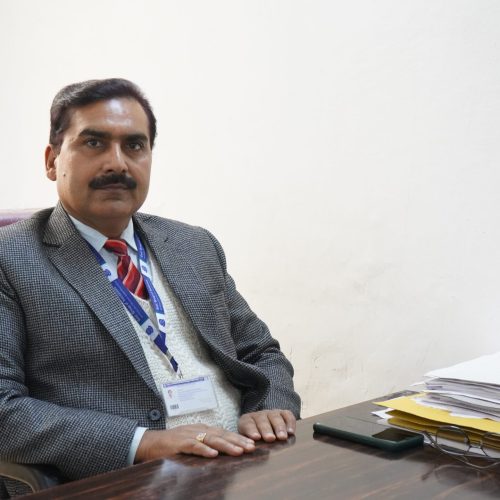
PROF.(DR.) SHAILESH NATH PANDEY
Ph.D (Mathematics)
Deen Dayal Upadhyaya Gorakhpur University,
Gorakhpur
Highlights of the Department
Highly qualified and experienced faculties with good research publications in SCI/SCOPUS indexing journals.
Online Certification Courses and FDPs from NPTEL, SWAYAM, IIT’s, ATAL, etc.
Developing Soft Skills and Personality
Enhancing Soft Skills and Personality
Strong foundation and grooming of students through
Induction Program
Motivational Lectures
Seminars
NPTEL Courses
Workshops
Webinars etc.
Promoting Participation of students in College / University / State / National / International Level competitions/events.
To establish a strong foundation among students Applied Sciences & Humanities plays a vital and pivotal role as it touches the basics of entire engineering subjects.
Laboratory
- Applied Physics Laboratory
- Applied Chemistry Laboratory
- English Language Lab
Program Outcomes (PO)
- Engineering knowledge: Apply the knowledge of mathematics, science, engineering fundamentals, and an engineering specialization to the solution of complex engineering problems.
- Problem analysis: Identity, formulate, review research literature, and analyze complex engineering problems reaching substantiated conclusions using first principles of mathematics, natural sciences, and engineering sciences.
- Design/development of solutions: Design solutions for complex engineering problems and design system components or processes that meet the specified needs with appropriate consideration for public health and safety, and the cultural, societal, and environmental considerations.
- Conduct investigations of complex problems: Use research-based knowledge and research methods including design of experiments, analysis and interpretation of data, and synthesis of the information to provide valid conclusions..
- Modern tool usage: Create, select, and apply appropriate techniques, resources, and modern engineering and IT tools including prediction and modelling to complex engineering activities with an understanding of the limitations.
- The engineer and society: Apply to reason informed by the contextual knowledge to assess societal, health, safety, legal and cultural issues and the consequent responsibilities relevant to the professional engineering practice.
- Environment and sustainability: Understand the impact of the professional engineering solutions in societal and environmental contexts, and demonstrate the knowledge of, and need for sustainable development.
- Ethics: Apply ethical principles and commit to professional ethics and responsibilities and norms of the engineering practice.
- Individual and teamwork: Function effectively as an individual, and as a member or leader in diverse teams, and in multidisciplinary settings.
- Communication: Communicate effectively on complex engineering activities with the engineering community and with society at large, such as, being able to comprehend and write effective reports and design documentation, make effective presentations, and give and receive clear instructions.
- Project management and finance: Demonstrate knowledge and understanding of the engineering and management principles and apply these to one’s own work, as a member and leader in a team, to manage projects and in multidisciplinary environments.
- Life-long learning: Recognize the need for, and have the preparation and ability to engage in independent and life-long learning in the broadest context of technological change.
Program Educational Objectives (PEO)
- PSO1: Develop the ability to understand, demonstrate, identify, analyze and apply the skills and knowledge gained from foundational courses of Applied Science and Humanities, and relate these fundamentals with core subjects in the relevant field.
- PSO2: Provide knowledge of modern skills in technology through self-learning in the areas of design, analysis and innovation of scientific and engineering domains.
- PSO3: On completion of the program the students are well poised to pursue careers in academia, industry and the other areas of Science and Engineering.
Program Specific Outcomes (PSO)
- Apply the concepts of electronics, communications, signal processing, VLSI, Control systems etc. in the design, development and implementation of application oriented engineering systems.
- Solve complex problems in the domain of Electronics and Communication using latest hardware and software tools, along with analytical and managerial skills to arrive at cost effective and optimum solutions, either independently or as a team.
- Apply technological leadership with ethical responsibilities, to built real world applications accommodating with dynamic technological changes while considering
social & environmental issues.
Faculty Members
| S.No. | Name | Designation | Qualification |
|---|---|---|---|
| 1 | Dr. Shailesh Nath Pandey | Professor & HOD | Ph.D |
| 2 | Dr. Ashwani Srivastava | Professor | Ph.D |
| 3 | Dr. Anil Kumar Bhardwaj | Professor | Ph.D |
| 4 | Dr. Alok Kumar | Professor | Ph.D |
| 5 | Dr. Preeti Porov | Associate Professor | Ph.D |
| 6 | Dr. Ramesh Yadav | Associate Professor | Ph.D |
| 7 | Dr. Ashutosh Singh | Associate Professor | Ph.D |
| 8 | Dr. Manju Singh | Associate Professor | Ph.D |
| 9 | Dr. Purshottam Kumar Srivastava | Associate Professor | Ph.D |
| 10 | Dr. Ankita Singh | Associate Professor | Ph.D |
| 11 | Ms. Shruti Kalra | Associate Professor | Master of Science |
| 12 | Dr. Arun Dubey | Asst Professor | Ph.D |
| 13 | Dr. Abhay Prakash Srivastava | Asst Professor | Ph.D |
| 14 | Dr. Nimisha Misra | Assistant Professor | Ph.D |
| 15 | Mr. Shekhar Srivastava | Asst Professor | Master of Science, Ph.D (Pursuing) |
| 16 | Ms. Vidhu Tripathi | Asst Professor | Master of Science, Ph.D (Pursuing) |
| 17 | Mr. Digvijay Singh | Asst Professor | Master of Science, Ph.D (Pursuing) |
| 18 | Mr. Vikas Srivastava | Asst Professor | Master of Science, Ph.D (Pursuing) |
| 19 | Mr. Ranjeet Kumar | Asst Professor | Master of Science |
| 20 | Ms. Ankita Pandey | Assistant Professor | Master of Science |
| 21 | Mr. Shanti Kesh Singh | Asst Professor | Master of Science |
| 22 | Ms. Ekta Sinha | Asst Professor | Master of Art |
| 23 | Ms. Parul Saxena | Asst Professor | Master of Art |
