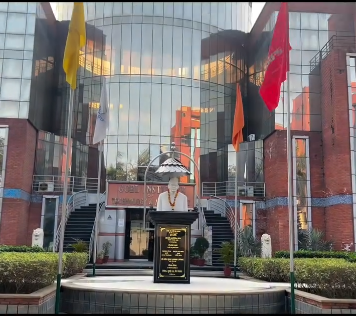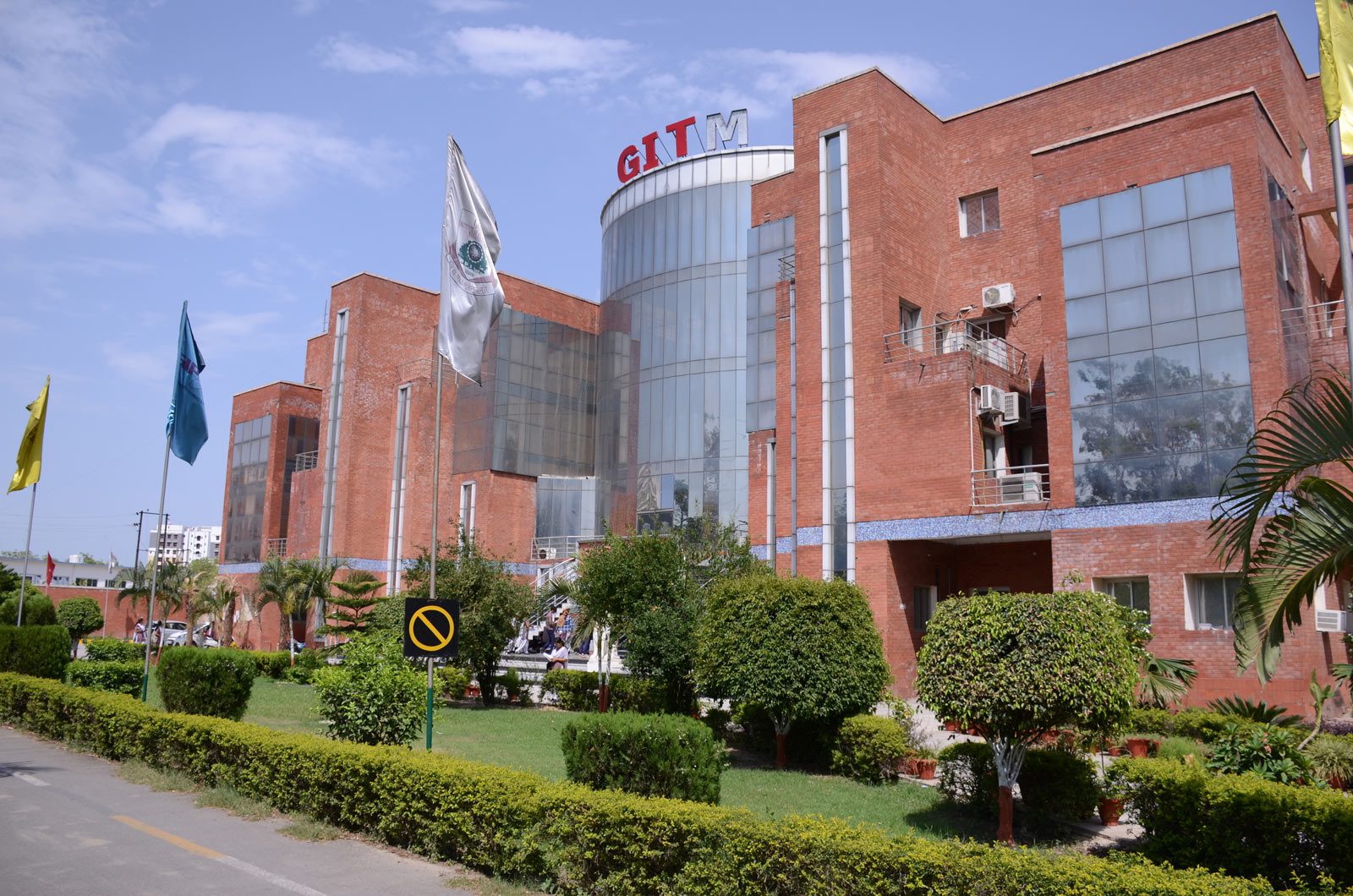













Goel Institute of Technology & Management

Faculty sr coc responsibility

Service rules, Code of Conduct and responsibility for faculty

1.1 Purpose and Scope:

(i) As faculty members of Goel Institute of Technology and Management, they are responsible for contribution and sustenance of the standards of the institution. They should comply with the relevant policies, rules, regulations, norms and standards set to guide their work. While every individual member is accountable for his/her action, as member of the Institute community, they are collectively accountable for upholding those standards of behavior and for compliance with all applicable rules, regulations and code of conduct.

(ii) This document details the rules and regulations that every faculty member should follow and the code of conduct they should adopt in the discharge of their professional duties. These rules and regulations are not exhaustive and hence, the detailed instructions issued from time to time and the modifications made in these due to necessities have to be adopted by the faculty members.


1.2 Applicability and Infringements:

These rules and regulations and code of conduct prescribed apply to all fulltime faculty members, visiting faculty members, faculty members on contract/part-time employment of institute.


1.3 Curricular Related

1.3.1 Teaching and Learning:
A faculty is responsible for:    

(i) Teaching of both core and elective courses in the field of his/her specialization as allocated by the Head of the Department for various programs offered by the Institute.

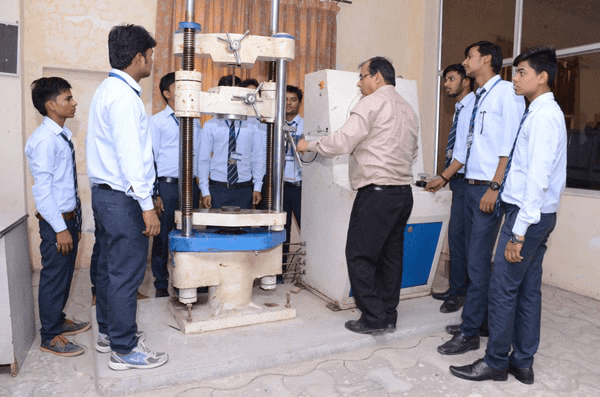
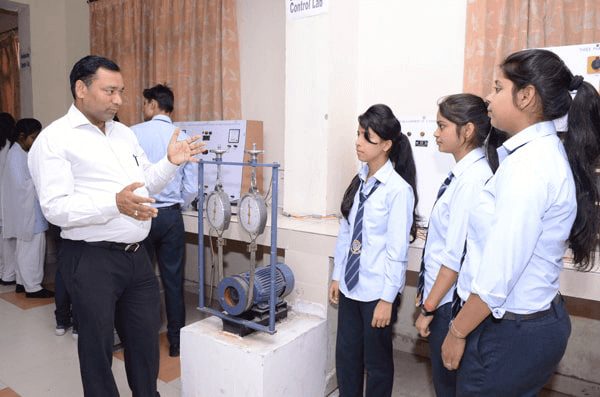
(ii) Conducting laboratory courses, tutorials and seminars of the programs assigned to him/her in an effective manner, so as to improve the practical knowledge of the student.

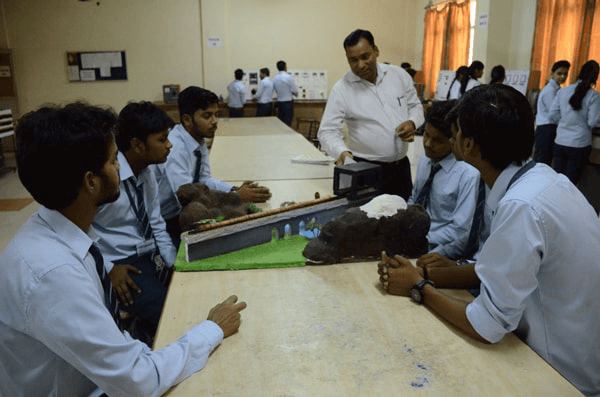
(iii) Providing proper guidance and supervision of the project work undertaken by students and development of proper rapport with the industry/organization if the project is industry related one.

(iv) Making the teaching more effective and interesting to the students by the use of multi-media teaching aids.

(v) Making the laboratory and seminar classes more purposeful by examining the students orally either before or after the experiment/seminar to improve the student’s understanding of the subject.

(vi) On the whole, the teaching learning shall be learner centered ensuring learning outcome of different courses.


1.3.2 Course Planning and Material Preparation:

(i) The faculty member is required to plan and make complete preparation well in advance to effectively teach the theory and practical courses.

(ii) He/she should prepare the schedule of lectures with topics, tests, assignments, demonstrations, screening of video or power point presentation etc., in advance and the students should be informed of the same.

(iii) The faculty member has to design experiments for laboratory classes so as to improve the student’s creative skills besides properly understanding the physical phenomena or concept.


1.3.3 Examination, evaluation and grading:

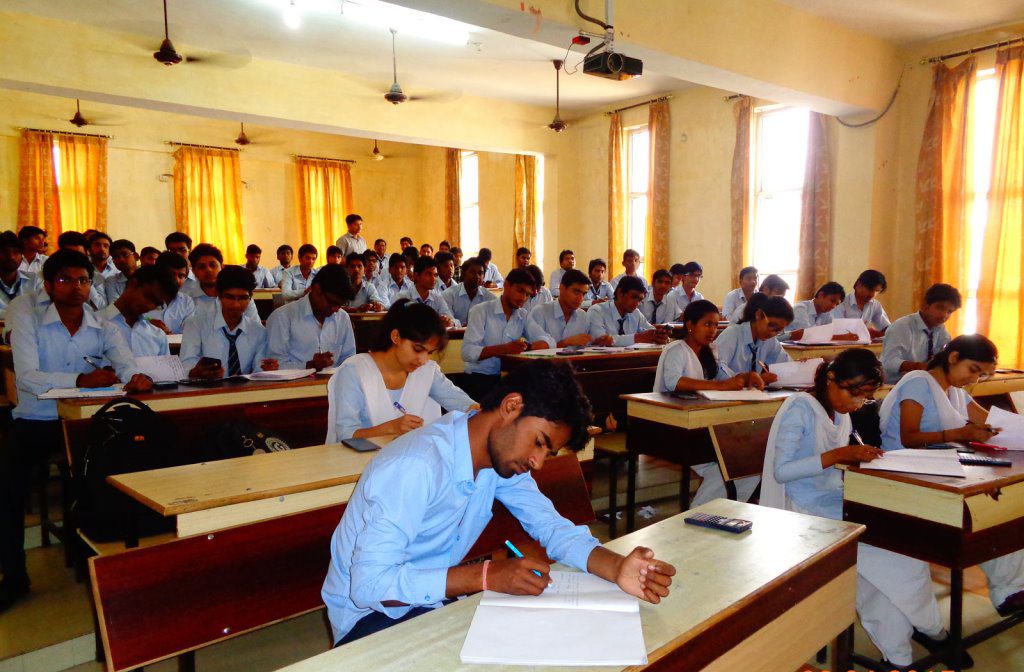
(i) A faculty is required to set standard question papers to test the knowledge /analytical thinking of students and evaluate the answer scripts of courses not only taught by him/her, but also that assigned to him/her by the Dean/Head of Department of the Institute.

(ii) A faculty is required to conduct and invigilate any exam/test in the institute. Such test/exam may be for the course taught by him/her or for any other course assigned by the Head of Department of the Institute.

(iii) A faculty member while evaluating answer scripts, oral examination/project work evaluation, should scrupulously be objective in his/her approach so that the student can earn the marks/grading for his/her performance only. Besides, he/she should indicate the mistakes on the script except for end semester examination, where no marking is permitted to be made on the script.


1.3.4 Maintenance of Records:

(i) Each faculty member is required to maintain the record of class work, attendance and continuous assessment neatly, properly and in time. This should be produced to the Head of the Department (HOD) as and when called for or immediately after the test for scrutiny and should be handed over to the HOD after the academic audit.

(ii) Each faculty member is required to maintain course file in proper standard format set by the academic council of institute.

(iii) If the faculty member is assigned to be the Class coordinator/Mentor by the HOD, he/she should maintain the list of students under him / her, their parent/local guardian contact address/phone/mail ID etc., so that the student’s progress could be monitored and communicated to them. The Class coordinator/Mentor shall also maintain cumulative record of attendance for the courses undergone by the student course-wise. The Class coordinator/Mentor should also help the HOD in counseling poorly performing students and the follow up action taken to improve the students’ performance.


1.3.5 Monitoring of students’ progress:

(i) The faculty of any course is required to watch the attendance and academic performance of each student of his/her course and take necessary steps at his/her command to improve the student’s progress. If his/her effort fails, the faculty member should bring it to the notice of the HOD and the Class Coordinator/Mentor so that the information can be sent to the parents/guardians.

(ii) A faculty member is required to attend/organize the Class student Meeting either as a course teacher and/or as chairperson of the class coordinator meeting and should actively participate in the deliberations there to improve the teaching-learning process.

(iii) A faculty member may be required to be a Mentor to a group of students. He/she is then really a counselor for the students in his/her group. He/she has to keep account of the courses registered/enrolled by them and advice and counsel the students.

(iv) A faculty member has to be thorough with the regulations of the academic program offered by his/her Department and other instructions issued from time to time so that he/she can effectively guide the student.

(v) As a Class coordinator/Mentor, the faculty member is required to motivate students under his/her care and also help them while they face any other general problem still they leave the Institute.


1.3.6 Punctuality and regularity:

(i) The faculty member shall not permit any student to attend the class after the stipulated time specified by the Institute so as to ensure punctuality in attending class by the students.

(ii) A faculty member is required to make alternative arrangement to handle his/her scheduled course work and other works whenever he/she goes on leave.

(iii) As far as possible a faculty member should not miss the scheduled class and only under unavoidable circumstances alternative arrangement can be made. This will ensure better compliance of scheduled classes.

(iv) A faculty member shall be punctual in attending class and leave the classroom after his/her class is over only after the arrival of the faculty for the next period or instruct the students to go to the laboratory/workshop for practical classes, as the case maybe.

(v) The faculty member shall carry out any other academic related activity that may be assigned to him by the HOD/Higher Authorities from time to time.


1.4 Research and Development:

1.4.1 Academic research:

(i) As research is an inherent component of the functions of an Institute, every faculty member shall take active efforts to make research contributions in his/her field of specialization.

(ii) A faculty member should identify specific aspects relating to his/her area of specialization in which there is considerable scope for further working, so thatHe/sheeitherdoesitbyhimself/herselformotivatesundergraduateandpostgraduate scholars or a junior colleague to take up the study under his/her supervision.

(iii) Faculty members who act as Research/project Supervisors should spare adequate time to the students for discussion and monitor their progress, so that not only the quality of work is improved but also time over-run can be avoided.

(iv) As the scope for doing further research work from the undergraduate and postgraduate students’ project work is ample, active involvement of the faculty member in the student’s project work is very essential.

(v) If the student’s project work is industry related, the faculty member shall visit the industry to know the problem in its perspective so that he/she can guide effectively. In fact, this will help to develop contact with the industry.

(vi) Interdisciplinary and collaborative research is assuming enormous proportions a faculty should take efforts to identify such area(s) by interaction with his/her colleagues in other department so researchers in established R&D laboratories for collaborative research purposes.


1.4.2 Research publications and books:

(i) As research publications in refereed journals of international importance not only improve the individual’s image but also of the institution, every faculty member should strive to bring out such quality publications.

(ii) Faculty members should publish their research output only in SCI/SSCI/Scopus/UGC index journals and publications

(iii) Faculty members shall also strive to file patents if their research output is felt new and novel.

(iv) Depending upon the research content, the faculty member may also present papers in International/National level conferences, but the impact they command compared to publications in refereed journals is considered much less.

(v) Faculty member should also take efforts to bring out his/her research work other than refereed journal papers, in the form of books or chapters in the books published by the international/National level publishers with ISBN/ISSN numbers.


1.4.3 Sponsored and funded research projects:

(i) An important source of financing and professional recognition to the Institute is sponsored and funded research projects. Therefore, every faculty member should browse the web sites of various funding agencies, advertisement, etc., periodically and submit research proposals in the proper format to those agencies to secure funding assistance for research and acquiring facilities such as equipment, instruments, etc.

(ii) Many funding agencies provide funding assistance for establishment of center of excellence. A faculty member may also examine and send proposal pertaining to his/her department or inter disciplinary ones for establishment of such centers.

(iii) Students should also be encouraged by faculty members to submit proposals for securing funding assistance for student projects from Science and Technology Councils of the State and Centre and other agencies.

(iv) The effort of the faculty member must be to convert his/her creative idea in to a product either physical, conceptual or computer software. In order to get recognition not only for the faculty, but also, for the institution, he/she should take efforts to obtain Patent/Intellectual Property Right (IPR) so that nobody could copy them.


1.5 Consultancy and Extension Activities:

1.5.1 Consultancy projects:

(i) Executing consultancy works for the state and private organizations is another important source of financial resource to the Institute. A faculty member should take efforts to secure consultancy works in his/her area of specialization from industries and business or from State agencies.

(ii) To secure consultancy work, the individual’s capability in solving practical problem in his/her area of specialization besides development of good rapport is very essential. Guiding industry oriented student projects is an easy way of establishing contacts with the industry counter parts. Hence, faculty member guiding such project works should establish proper, healthy and positive rapport with the concerned industry from where such project work is undertaken.

(iii) A faculty member should constantly update his/her knowledge, familiarize himself /herself with the problem of industry by going through industry publications, attending professional society meetings etc., to establish contact and get to know the problem of industry.

(iv) Attending seminars and conferences organized by professional institutions such as Confederation of Indian Industry (CII), Federation of Indian Chamber of Commerce & Industry (FICCI), The Institution of Engineers (IEI), Institute of Electrical and Electronics Engineers (IEEE), Computer society of India (CSI) or other Industrial Associations will also help to understand the problem of industry.


1.5.2 Extension activities:

(i) A faculty member should take efforts to organize refresher courses, seminars, workshops not only for the benefit of faculty members but also for participants of industry and society at large. Such program could be self supporting or sponsored ones.

(ii) Conductsofcontinuingeducationprogram/structuredcoursestomeetspecificrequirementoftheindustryandsocietyisyetanotherwayofaugmenting resource for the Institute. A faculty member can organize such programs either one time or on continual basis year on year.

(iii) Extension activities could include various community oriented services, preferably using the expertise in the field of science and technology, and addressing the requirements of weaker sections of the society.


1.6. Involvement in Development Activities:

1.6.1 Laboratory Development & Maintenance:

(i) A faculty member is required to involve in the laboratory development activities of the Department by introducing innovative experimental setups /instruments/ computer software/ computer control of machines or processes.

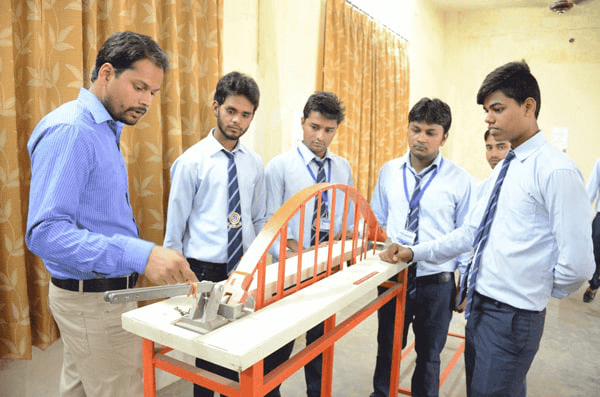
(ii) Whenever new courses or new topics are proposed in the curriculum and syllabi in the emerging areas, the faculty member can design and fabricate or assemble new experimental setup for use by students.

(iii) As a member of the faculty, he/she should ensure that the various machinery and equipment in the laboratory and workshop are maintained in working condition and are used effectively both for academic requirement, project works and research related activities.

(iv) In case, a faculty member is assigned to be in charge of laboratory or workshop, he/she has to oversee the work of technical staff of the laboratory, besides arranging for periodical maintenance / repair and recalibration wherever necessary.

(v) As one in charge of laboratory, he/she has to ensure proper maintenance of stock registers, both consumable and non-consumable, periodical stock verifications, and proposal for replacement of over aged/unserviceable equipment, besides their safe custody.


1.6.2 Purchase of items for the laboratory:

(i) As one in charge of laboratory has to prepare budget every year after taking into account the academic course requirements, research needs and discuss with the HOD and finalize it before inclusion in the overall budget proposal of the Department.

(ii) As one in charge of laboratory has to initiate proposals for the purchase of consumables and equipment for his/her laboratory and take follow up action till it is procured and taken into stock.

(iii) The faculty member should help the HOD in finalizing the specifications of equipment to be purchased calling the quotations and evaluation and tabulation of bids to be placed before the Purchase Committee.

(iv) Once the budget proposals are approved by the management, the faculty in charge of the laboratory/workshop is responsible for the compliance of the budget proposal, unless it is altered or revised. If necessary, he/she has top repair revised budget proposal through the HOD.

(v) The faculty member shall follow the detailed guidelines/procedure issued by the Institute with regard to purchase of consumable and non-consumable items both indigenous as well as imported items.


1.6.3. Co-Curricular activities:

(i) A faculty member is required to arrange guest lectures, seminars etc., to supplement regular lectures and also help in the conduct of faculty development program, short-term program, workshops, and open houses, exhibitions organized by the Department or Institute.

(ii) A faculty member is required to organize industrial visits, educational tours and accompany the students to visits/tours as and when required by the HoD.

(iii) A faculty member if nominated as an Office-bearer such as Treasurer, Convener, coordinator, Adviser of Professional Society functioning in the Department/Institute he/she shall perform such duties accordingly.

(iv) A faculty member is required to help the Professional Societies in organizing annual events such as symposium, technical contest, quiz, and also in the interaction with the parent bodies (e.g. ASME, IEEE.CSI, IE etc.) to promote the student chapter of the professional bodies.

(v) A faculty member is required to coordinate National /International conferences/seminars / symposium/ workshop.

(vi) A faculty member should submit project proposals to the funding agencies for financial assistance to conduct seminars, conferences, etc.


1.6.4 Extra-curricular activities:

(i) A faculty member should see that the class rooms, department buildings, laboratories and surroundings are kept neat and tidy with the help of personnel assigned for this purpose.

(ii) A faculty member should ensure that lights and fans are switched off after the class is over, and if there is no lecture class for the students in the next period to save energy consumption.

(iii) As discipline in the campus is very essential, every faculty member should interfere if they notice indulgence by students in activities of condemnable nature.

(iv) A faculty member if required to help the HoD in all administrative matters like distribution of admit cards, mark sheets etc., and compilation of departmental replies to higher authorities etc.

(v) The faculty member has to serve as a member of any enquiry committee or as a member of various committees when ever the Department/Institute organizes major events such as SportsDay, Annual Day, Technical and Cultural Festivals, etc.

(vi) All faculty members are expected to oversee the students go to the class on time and not loitering in the campus.

(vii) Faculty members should also take part in activities related to NCC, NSC, NSO, Red Cross Society, Alumni Association, etc., as office bearer/organizer and shall discharge the duties assigned to the position.

(viii) Any other activity(s) related to Department or Institutional Development that may be assigned to the faculty member depending on the need.


1.7. Code of Conduct:

As members of administrative and technical category staff, their responsibility in providing necessary support services in imparting education, research and extension activities of the Institute and in the administration of the Institute is enormous. They are responsible for sustaining the highest ethical standards of the Institute and the broader community in which they function. This code serves as a guide to all the members of both the category.


1.7.1 Applicability and Violations:

The members should bring to the attention of appropriate authority any suspected violations of any of the provisions of these rules and regulations. Raising such a concern is a service to the Institute and will not jeopardize one’s position or employment. Proved violations will result in suitable disciplinary action up to and including termination from employment of the Institute. If needed, legal recourse may also be resorted against the concerned individuals depending on the gravity of violations.


1.7.2 Relationship with Students:

While the aim of the Institute is to ensure whole some development of students as future citizens of India, the technical and administrative staff should strive to achieve:

(i) According just and impartial treatment to all students irrespective of religion, community, caste, creed, sex, economic and social status.

(ii) Making regular contribution for the personal development of students, while looking after their interest and welfare.

(iii) Not disclosing confidential information about students, which the member knows, to anyone other than to authorize persons/agency or in the interest of law.

(iv) Having respect and an affectionate and friendly attitude towards all students and helping them to improve their behavior, unmindful of some untoward event if occurred, rather than having a feeling of revenge.

(v) Abstaining from indulging in any corrupt practices with the students by showing favor of any kind.

(vi) Dealing with parents/guardian of wards politely and compassionately when they approach the administrative staff, in connection with his/her ward’s educational matters, thereby ensuring proper public relations.

(vii) Trying to integrate the values of integrity, honesty and fairness and desire in all the dealings by the staff, since the Institute values them.


1.7.3 Relationship with Staff Members:

(i) As the technical and administrative staff is expected to work closely with the faculty of the Institute in day to day activities, the staff should

(ii) Respect the prerogative of the staff members to look after the education of the student and provide all assistance needed in the discharge of his/her duties in imparting education.

(iii) Develop friendly and co-operative relationship with the staff members.

(iv) Understand the role of supporting staff vis-à-vis the role of a faculty member that would enable developing proper relationship.

(v) Not to transgress his/her defined role in the interest of discharge of assigned duties and responsibilities.

(vi) Provide full co-operation and support to the staff members for the development of laboratory/workshop and in the maintenance/calibration of equipment.


1.7.4 Relationship with Colleagues:

(i) A member of technical and administrative category is expected to develop fraternal relationships with his/her colleagues to nurture proper interpersonal relationships and to develop team spirit. In particular he/she should,

(ii) Move with his/her colleagues in the Institute in a manner that he/she expects them to move with him/her.

(iii) Extend co-operation to his/ her colleagues in activities relating to academic and administrative matters and the development of his/her profession.

(iv) Eschew writing anonymous letters in self interest to the authorities about his/her colleagues thereby harming others in self interest.

(v) Resist spreading rumors or wrong news about his/her colleagues to express his/her displeasure.

(vi) Refrain from passing information about colleagues to any individual or agency without his/her express permission.


1.7.5 Relationship with Management:

(i) A member is expected to develop proper rapport with the employer viz. Management of the Institute. Mutual respect and fraternal feelings are needed to ensure proper relationships. Measures suggested to achieve the objective include,

(ii) Perform all professional activities through proper channels.

(iii) Do not discuss with unauthorized individuals about professional and other information pertaining to the Institute.

(iv) Look for promotion/elevation only on grounds of competence/performance.

(v) Do not expect appointment or promotion out of turn, based on favoritism or against professional interest/ethics.

(vi) Honor the provision of the bilateral agreement viz. bond/Institute, which the member committed/entered with the employer viz. Institute.

(vii) Do not undertake any responsibility/work involving financial benefit in contravention of professional etiquette and the general interest of the Institute.

(viii) Co-operate whole heartedly with the authorities of the Institute in the fulfillment of mission and goals of Institute by performing his/her role in a professional manner.

(ix) Avoid condemnation of authorities, behavior through anonymous communication to outsiders/newspapers and also conversational conflicts which harm the interest of Institute.

(x) Every member is required to conduct the Institute’s transaction with utmost honesty, integrity and fairness.

(xi) Avoid unethical practices even on the grounds that it is ‘customary’. Expediency should never compromise integrity.

(xii) Should follow all norms and job details assigned by the Institute to the member from time to time with dedication.


1.7.6 Use of Institutional Resources:

(i) The Institute resources include, but limited to, the use of telephone systems, data communication and networking services, Institute domain for electronic communication forums, computers and peripherals, stationery, reprographic facilities, vehicle and other equipment, time and effort of staff, students and others.

(ii) These resources must be used only for the purposes of the Institute. They should not be used for personal gain and for personal purposes, except in a manner that is incidental, and reasonable in the list of employee’s duties.


1.7.7 Relationship with Society:


The activities of a member of technical and administration are not only related to the Institute but also have a serious impact on common social interests. Therefore, the following aspects merit consideration in this regard:

(i) Adherence to desirable standards expected of the Institute by the society.

(ii) Participation in diverse activities of the community as a good citizen.

(iii) Soliciting public co-operation in the educational programs of the Institute.

(iv) Taking necessary efforts for the enrichment of educational, ethical, spiritual, cultural and intellectual life of the community.


1.7.8 Miscellaneous Rules Of Conduct:


(i) The following are the miscellaneous items of rules of conduct, which a member is expected to follow.

(ii) A staff member shall not indulge in any adverse criticism of the Institute and its officers by means of any article, broadcast or any other document or statement.

(iii) A staff member shall not be under the influence of any intoxicating drug or liquor during the hours of his/her duty.

(iv) Use of cell phones by students in the Institute campus during working hours is discouraged and hence a technical staff member should not use them during practical class hours, meetings, etc.

(v) All technical and administrative staff should follow the various rules and regulations framed; instructions issued by the Institute from time to time in true letter and spirit.

Facebook Instagram LinkedIn YouTube WhatsApp
Apply Now 2026-27